


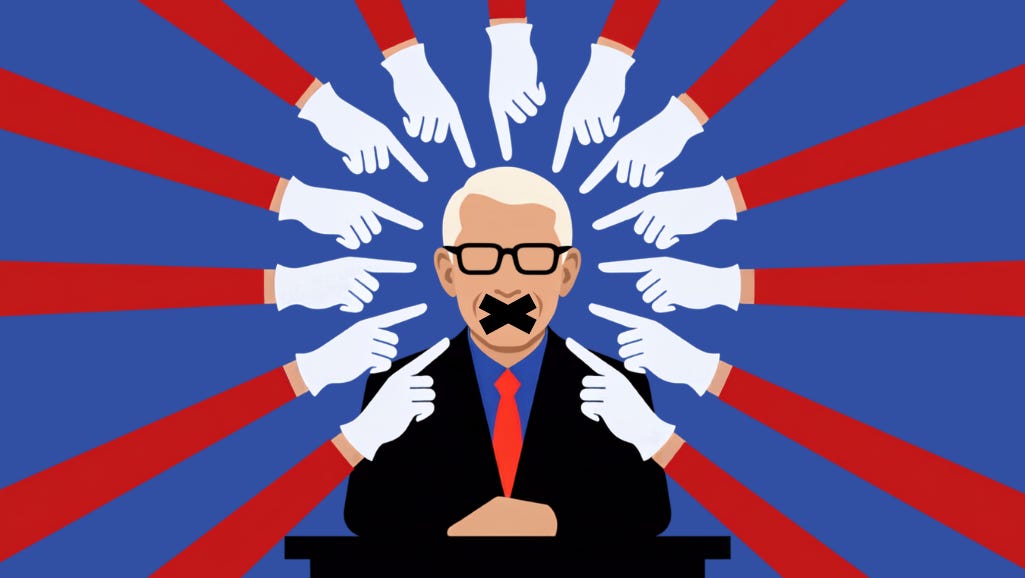
This week was a dying age meeting the wall, reaching the limits of what noise can substitute for wisdom, and fury can substitute for truth. But all the while, beneath the clatter of collapse, the sound of something deeper and more expansive beckoned beyond the noise.
A 7.1 magnitude earthquake struck southern Japan this week, killing 34 people and placing a quarter of a million more under evacuation orders. France and Spain are burning, with unprecedented wildfires forcing over 300,000 people to evacuate. Greece, Turkey and Canada are also on fire, and Washington state declared a wildfire emergency - much of the northern hemisphere is feeling the effects of climate change. And Russia is ablaze too, but that’s just because Putin is losing his war against Ukraine.
And Trump’s war in Iran continues on with no end in sight, as this week US Generals warned that Patriot interceptor stockpiles were being dangerously depleted. Trump’s strategy of “threaten obliteration, try to make a deal, bomb them into submission, rinse and repeat” can’t go on forever - he’s painted himself into a corner he can’t just blast his way out of. Reports are Trump’s furious - at everyone but himself - but all he seems capable of doing is posting AI slop on social media while the war rages and the markets fall.
Unable to end Trump’s war, his administration started another one, this time against history, ordering warning signs placed outside the Smithsonian’s National Museum of American History, telling visitors the exhibits were made by people who “don’t want you to love your country.” After new polling showed Trump’s approval rating hit an all-time low of 34%, they had to do something to rally the base.
Meanwhile Republican Senator Mitch McConnell’s still missing in action; hospitalised six weeks ago, he’s not been seen in public since, save for in photographs - another was released this week - that are widely believed to be fake. If any other government employee went off the job for forty days without a word, they’d be fired, but when you’re a Senator, it seems, you can just do whatever.
And speaking of the Senate, 85-year old Anthony Fauci was hauled into a hearing room this week so Republicans could rummage through his private diary and call him a narcissist and a liar. The sideshow seemed designed to trap the former senior health official into saying something incriminating regarding the pandemic that could make all their dreams come true and see him put behind bars, but Fauci gave them nothing, invoking his Fifth Amendment right to silence over a hundred times.
The real accounting the grief of 2020 deserves - for what went wrong, for who failed us and how - was not in that room. That room was built only for fury, because fury is what fear becomes when the mind meets a wall and doesn’t like the feeling, and that’s all there is at the end of the age; fury where there should be accountability, performance where there should be leadership, and power hollowed to an outline while assuring everyone the structure is sound.
The Age of the Mind is crashing out spectacularly, but not without purpose. What happened in Washington this week was the old world returning to the scene of its own first great fracture in 2020, the same fear wearing the same fury, pressing up against the same wall. What the pandemic cracked open was not just a civilisation's nerves but its foundations - a door the mind had spent centuries walling in - and the next thirty years, in the sky and on the ground, will be the crossing of it; out of our minds, and into the only place fit to navigate what comes next.
If you’re feeling exhausted by the news or like nothing makes sense any more, or you’re worried for the future and want to know what comes next, then read on, dear friend. As always, the sky is showing us exactly where we are, where we are headed and what’s required of us next.
We're going to take the long way through this one, all the way back to where the crack first opened, then forward to where it's carrying us. Stay with me to the end; that's where it all comes together.
Receive this Wrap-Up in your inbox every Sunday!
The cosmic insights shared here are mapped to the real movements of the heavens during the past week. If you want to know more about planetary pattern recognition, read about it here


The Year the World Stopped
To understand the story of this week we have to look back in time, to when a mysterious new respiratory illness started spreading in China, six years ago. This is the long way round, but it's the only way to see where we are and where we're headed, and by the end, this week will look like something other than a new crisis - so stay with me.
As news hit the headlines in January 2020 that Chinese authorities were locking down the city of Wuhan to stop the spread, the president of the United States at the time - Donald Trump - took to the podium to reassure Americans; according to him, the virus would miraculously disappear when the weather got warmer. But by February, the virus - now known as COVID19 - wasn’t disappearing; it was spreading rapidly across the globe.
In Italy, a man tested positive with no known link to China, and within days, hospitals began to fill as the cluster spread, and the whole country of 60 million people went into lockdown, as footage emerged that was unlike anything the Western world had seen in peacetime: overwhelmed hospitals, doctors in full PPE weeping in corridors, while convoys of military trucks rolled through the deserted streets carrying coffins.
By March, as the virus spread rapidly through Europe, Anthony Fauci appeared before Congress to warn law makers that the situation would worsen. Though most average Americans had never heard of him, Fauci had been a leading health official in America for almost fifty years at that point, having served under every president since Reagan, guiding the country through the AIDS crisis, through anthrax after September 11, and through SARS, and H1N1, and Ebola, and Zika. He’d spent his entire career in the background quietly becoming the world’s leading expert on infectious disease, but thanks to COVID he was about to become one of the most infamous men in America. Hours after he finished testifying in early March, the World Health Organisation officially declared a global pandemic, Trump announced travel restrictions from Europe, and nations worldwide began responding to the imminent threat.
New Zealand moved to a national lockdown before a single person had died in the country, implementing a clear four-level alert system with the goal of elimination, which was eventually achieved by June 2020. South Korea set up drive-through testing sites, alongside rapid contact tracing, digital monitoring, and immediate isolation, so no full national lockdown was ever required, and by the summer, South Koreans were back in cinemas and restaurants. Germany, Australia, Denmark, Canada, Norway, Finland and most western countries produced political leaders who followed the advice of health officials, laying out a clear plan for getting through the crisis, together; wear a mask, stay home, stop the spread, and wait for the vaccine.
Even British Prime Minister Boris Johnson - who initially bragged about shaking hands with COVID patients, and explored a herd immunity strategy - eventually got out of the way and let the scientists lead after he himself got COVID and ended up in intensive care. A brush with death has a way of clarifying things.
But in America, things were different. Initially, Fauci advised the public that masks weren’t necessary - there was concern that a rush on masks might divert limited supply away from frontline workers who would die without them, though he didn’t say so publicly at the time. But as it became clear COVID spread pre-symptomatically, Fauci’s guidance changed to follow the science, and he began urging that everyone should wear a mask. Without a satisfying explanation for what appeared to be a flip-flop, millions of Americans - rightly or wrongly - began to doubt whether Fauci could be trusted.
It didn’t help that Trump used his addresses to the nation to actively undermine the senior health advisor. He’d introduce Fauci and then contradict him in the same breath, leaving Fauci to try and walk back what had been said without appearing to walk it back, so as not to be removed from the podium entirely.
Trump promised - based on nothing - that the rising numbers of infected would drop down to zero within days, and that anyone who wanted to get a test could get one, but both statements turned out to be false; the national testing infrastructure under Trump was so underfunded and underprepared that the CDC had sent out a faulty test in late January, setting the whole programme back by weeks. When asked about the testing failures, Trump just waved it away, saying “I don’t take any responsibility at all.”
In the absence of strong federal leadership, states were left to figure it out themselves. Some governors began issuing stay-at-home orders and closing schools while competing against other states and the federal government to buy protective equipment on the open market. Amidst the confusion, fear and panic, businesses began closing, Broadway shuttered, the NBA suspended its season mid-game, and the streets went quiet, while in the hospitals, the real story was only just beginning.
Want the Wrap-Up sent to your inbox each Sunday?
The Inconvenient Truth
Hospital worker Azadeh Ghafari recalled in a post this week that in those early days of the pandemic, patients in America’s hospitals were literally drowning in their own bodies while fully conscious, as their lungs filled with blood clots, and medical teams flipped them onto their stomachs, prone, because that was one of the only things that bought a little more time. Teams would work on a single patient for hours, adjusting oxygen levels, suctioning airways, trying every position and every ventilator setting, and it still wasn’t enough. “You could see the moment someone understood what was happening to them,” Ghafari remembers. “Some of them tried to say something and couldn’t get the air behind it.”
Then the virus started coming for medical professionals too. “Some got sick enough that they couldn’t work for months. Some came back changed, still fighting fatigue and lung damage years later. Some didn’t come back at all.” To keep hospitals running, medical staff started sleeping in garages and cars because they couldn’t risk carrying the disease back through their own front door and infecting their families. Medical students graduated early and were put straight onto COVID units - their first experience of practicing medicine was wearing layers of restrictive PPE like armour whilst caring for dying patients as they gasped for air, lined up in the corridors. “I sat with staff who’d been steady for twenty years and watched them fall apart in a supply closet after a fourth death call in one shift. I watched a colleague’s hands start shaking and never fully stop.”
People on their death bed said goodbye to their children over an iPad, while freezer trucks sat in hospital parking lots full of dead bodies because the morgues were all full. Funeral homes couldn’t keep up, so bodies were shipped out of state just to get them embalmed or cremated, because there was nowhere left to put them.
In the face of the unfolding disaster, Americans tuned in nightly to the White House briefings where Fauci continued to diligently advise people to wear masks, get tested, stay home if they could, and trust that a vaccine was coming, alongside Trump offering a jumble of whatever came into his head. Fauci pushed for testing infrastructure while the White House insisted the system worked fine, and advocated for mask mandates while Trump publicly refused to wear one, and urged caution about reopening as Trump declared it was time to get back to normal. Every time Fauci stepped to the podium, he had to hold a line between what the data was showing and what Trump wanted people to believe, offering his advice, so the man in charge could make decisions that ranged from confused to catastrophic.
As hospitals overflowed and frontline workers were asked to use bin bags as protective gowns because the PPE supply had run out, Trump began promoting hydroxychloroquine - an anti-malaria drug - as a treatment for COVID. When Fauci was asked about it by reporters, he described the evidence for the drug’s possible efficacy as “anecdotal” and “at best suggestive,” but Trump kept promoting it anyway, and clinical trials would later show it had no benefit and potentially caused harm.
The mixed messaging from Trump’s White House was constant: some days the virus was serious, some days it was like the flu, and some days Trump was suggesting that injecting disinfectant into the body or bringing ultraviolet light inside it somehow might be worth looking into. Poison control centres across the country logged a spike in incidents, and the manufacturer of Lysol had to put out a statement urging people not to ingest or inject its products, but that didn’t stop Trump spouting his own made-up science that Fauci would invariably have to try to clean up.
Fauci, a man who’d spent his career working diligently in the shadows, inadvertently found himself thrust into the spotlight as the face of the crisis, caught inside a political machine that wanted the crisis not to exist.
Want the Wrap-Up sent to your inbox each Sunday?
The Seeds of Distrust
As the human face of the pandemic, Fauci became the receptacle for the nation’s displeasure about its discomfort.
Don’t like the lockdowns?
Must be Fauci’s fault.
Don’t like wearing a mask?
Fauci’s trying to control you.
Don’t like your freedoms being encroached on for the good of the whole?
Blame Fauci - he’s a fascist.
The logic didn’t always hold together, but it rarely does when fear’s in the driver’s seat, disguising itself as fury. Americans were afraid of losing their businesses and their jobs, and afraid of running out of money to pay rent, or to buy food, or to keep the lights on, and afraid of getting sick, because in America, getting sick enough to be hospitalised could mean emerging - if you were lucky enough to survive - with a medical bill that dwarfed everything else you’d lost. The federal government scrambled out emergency loans and temporary unemployment supplements, but the programmes were chaotic, the money was slow, and for a significant portion of the country, it wasn’t enough and didn’t arrive in time. There was no satisfactory safety net to cushion the pandemic’s blow.
In other countries, when the government asked people to stay home, people broadly did, partly because they trusted their leaders - at least in the early days - and partly because their government made it possible. In Australia, a JobKeeper scheme paid employers to keep workers on the payroll so people could afford to stay home, and the free public health system meant that if you got COVID, the hospital wouldn’t bankrupt you. The fear was still there, but the grinding terror of economic ruin was cushioned, which made it possible for people to look at their leaders with something other than fury and fear.
Americans had no such cushion, and when you’re terrified, financially exposed, watching your life’s work close its doors, and the person who was supposed to protect you is standing at a podium suggesting you might try injecting disinfectant, it’s natural to look for someone to blame. For those who had fallen into the cult of Trump and voted for him and still blindly believed in him, that person could not be Trump, and so they found Fauci: visible, associated with every restriction that had cost them something, and - conveniently - not the president. Fauci was the perfect receptacle for everything Trump had failed to absorb.
Fauci also oversaw the division of the National Institutes of Health responsible for funding coronavirus research at the Wuhan lab down the street from the wet market in China where the virus was said to have first emerged. When the early narrative that it had jumped from a bat to a human at the Wuhan wet market gave way to the notion that it may actually have escaped from the American funded lab down the street, the public naturally had questions, and Fauci was the man to answer them.
When asked about it, Fauci emphatically shut down the suggestion of a lab leak, stating repeatedly and confidently that it was not something the evidence supported. But many Americans already suspicious of Fauci found his answer dissatisfying, and their growing distrust - fuelled by fear and frustration with the lockdowns and restrictions - led a large portion of the nation to seek a more satisfying explanation.
That explanation arrived in the form of a 2020 documentary called Plandemic, that argued the virus had been deliberately engineered and released to crash the global economy, force mass vaccine uptake, and allow a small group of elites to seize control of governments worldwide. Suddenly, Fauci wasn’t just a flawed public servant who had managed information poorly, but a cunning architect plotting a vaccine that contained microchips, or graphene oxide, or mRNA designed to alter human DNA, or a delayed kill switch - the specific mechanism varied by source. Bill Gates was funding it. Klaus Schwab was coordinating it. The hospitals weren’t overwhelmed - the death figures were fabricated, the nurses were dancing, the ventilators were killing people, not saving them, and COVID itself was a hoax, or no worse than flu, or a cover story for something else entirely.
The documentary’s narrative was embraced by those who felt that something was wrong with Fauci’s emphatic dismissals of the lab leak theory or his shifting guidance around masks - the leap from “I was lied to about masks” to “the vaccine is a bioweapon” is a large one, but it follows the logic of a mind that has been given one perceived deception and reasonably concludes that the institution capable of one is capable of any.
But the narrative was fundamentally flawed and at odds with itself. On one hand, it held that the disease wasn't real at all, and that the deaths were fabricated, the hospitals were empty, and the nurses were actors, while on the other it insisted the disease was real but deliberately engineered and released as the opening move in a plan for global control. Both ideas circulated freely, often in the same communities, sometimes in the same person, directly cancelling each other out. A hoax requires no victims. A bioweapon requires real ones. You can't run both theories at once.
But fear doesn't do coherent logic, so both ran anyway, flying in the face of the observable truth that COVID was very real, and was killing millions of people worldwide, and infecting millions more, overrunning the very systems a man like Fauci oversaw. If this was his master plan, it wasn’t a terribly good one.
Fear can make a person believe the strangest things, and in 2020, America gave people plenty to be afraid of, and precious little to hold onto, which made the story of a villain feel, for a great many people, like the only story that made sense.
Want the Wrap-Up sent to your inbox each Sunday?
Be part of our community. Join the Inner Circle
The Prize and the Blame
By the summer, conspiracy theories had gripped much of the nation and began spreading across the world. Nurses who’d spent months holding the hands of the dying were being spat at in supermarkets by people who believed they were crisis actors, and advised by hospitals to change out of their scrubs before they left the building so they wouldn’t be targeted on the way to the car park. The fury that couldn’t reach Fauci found the nearest available body instead.
Many people who had spent the year insisting the virus wasn’t real, and filming themselves coughing on strangers to prove it, ended up sick and dying in ICU demanding hydroxychloroquine - the drug the president assured them would work - from exhausted nurses whose lives were being threatened, who still cared for them anyway.
The toll on those front line workers was permanent. Thousands of American nurses left the profession entirely during those years - not from the virus, but from the shattering weight of being villainised while trying to care, and of watching person after person die for a cause a third of the country had decided wasn’t real. More than half of acute care nurses surveyed in the aftermath screened positive for PTSD. The people who ran toward the crisis came out the other side still carrying it.
As the situation soured on hospital wards, so did the relationship between Trump and Fauci; the nation’s top infectious disease expert was blocked from briefing the president, while the White House quietly leaked memos attempting to discredit him. Trump told reporters of Fauci, “I don’t always agree with him” as if scientific consensus was simply another opinion to weigh against his own, and while Fauci was telling the country that America’s pandemic performance lagged every comparable nation - that testing was inadequate, that restrictions were being lifted too soon - the White House was announcing that the pandemic was essentially under control.
While Trump and his acolytes were hurling Fauci under the bus, the science he’d spent his life defending managed to produce a safe and effective vaccine for COVID in under a year - a feat that should have been the defining achievement of the age, and a moment of national unification. Operation Warp Speed - the programme that delivered it in record time by December 2020 - was a genuine Trump administration achievement, so the logical move, for any president, would have been to emphatically tell the country to take the vaccine he’d made possible. But he didn’t - not really.
Trump was quietly vaccinated in January 2021, before leaving office, without cameras or a public push. His base had spent twelve months absorbing the messaging that Fauci was a fraud, that the pandemic was overstated, and the restrictions were tyranny, and had already concluded that the vaccine was part of the same lie, so to stand up and tell people to take the shot would have been admitting that the scientists were right, and that was a thing the Republican Party had spent a year making politically impossible.
So in the end, the administration that produced the vaccine did almost nothing to encourage its own voters to take it, despite the fact that more than 300,000 Americans had died by the time the first vaccine was administered. As a result, vaccine uptake split almost perfectly along political lines; study after study through 2021 showed significantly higher death rates in Republican-leaning counties than Democrat-leaning ones - people continued to die of a political calculation their leaders had made and then abandoned them to.
Though the administration that told people to inject disinfectant would eventually award Fauci the Presidential Commendation for his role in making the vaccine miracle happen, they also fanned the flames of the narrative that cast him as the villain in the story of the pandemic for their own political purposes. Fauci got the prize and the blame, and into that brazen contradiction stepped Senator Rand Paul.
Want the Wrap-Up sent to your inbox each Sunday?
Fauci vs Rand Paul
A Kentucky Republican and ophthalmologist by training, Rand Paul’s political brand has always been the skeptic, so it’s no surprise it was he who asked Fauci in a 2021 Senate hearing if his division of the National Institutes of Health had funded research at the Wuhan Institute of Virology that involved manipulating viruses to make them more transmissible - a category of research sometimes called “gain of function” - and if so, had American taxpayer money helped create the conditions for the pandemic?
Fauci’s answer was categorical and aggressive: “The NIH has not ever and does not now fund gain-of-function research” at the Wuhan Institute. When Paul pressed further, implying Fauci was lying, Fauci said, defiantly, “If anybody is lying here, senator, it is you. You do not know what you are talking about.”
Fauci’s argument was that, yes, National Institutes of Health money went to the Wuhan lab studying bat coronaviruses, but that research involved characterising naturally occurring viruses to see if they could infect human cells, not engineering new ones to be more dangerous. It didn’t meet the federal government’s regulatory definition of gain-of-function research. Technically, he maintained, they had funded nothing of the kind.
But that answer came in to question this week when Fauci - now in his eighties - was called back to Capitol Hill for questioning about the contents of his private diaries, leaked by Rand Paul after Health Secretary RFK Jr. used his position to search government files looking for material related to the pandemic, and found Fauci's typewritten diary entries stored on government systems.
The diaries were hardly a smoking gun - there was no admission of a conspiracy or confession that Fauci had snuck nanobots into the vaccine. They were more embarrassing than incriminating, revealing Fauci to be a man who had become swept up in his own celebrity, describing his fame as “explosive and really unimaginable,” noting he had become “the most famous and talked about person in the country.”
But what Paul was salivating over was an entry from February 2020 in which Fauci acknowledged that the Wuhan Institute had been “working for years in GOF in coronaviruses” with American support - seemingly contradicting the words he had categorically denied in a Senate hearing.
The diary also documented a call with the world’s leading virologists around the time Fauci was publicly dismissing the Wuhan lab leak theory, where the majority asserted that deliberate insertion was possible, flagging features of the virus that looked potentially engineered, but concluded that the possibility should not be aired in public. That call became the basis for a paper published soon after in Nature Medicine arguing forcefully against lab origin - a paper Fauci’s team helped encourage.
And so it was that Fauci found himself this week once again brought before the Senate to face a litany of questions about the pandemic.
The grief of 2020 deserves a genuine accounting - a rigorous, independent investigation into exactly what research America funded in Wuhan and whether any of it contributed to what happened, not to mention the many missteps made by Trump administration that contributed to the deaths of hundreds of thousands of Americans - but what it got instead this week was Rand Paul, who’s been fundraising for the last five years off the back of pledges to put Fauci “behind bars,” accusing him of mass murder whilst using Fauci’s face to solicit millions in campaign donations.
Fauci called the Senator out in his opening statement this week, saying, “The sole reason you are calling me before this committee is to get me to say something - anything - that could vindicate your repeated public pledges that I end up, in your words, behind bars.” Then, on the advice of counsel, he invoked his Fifth Amendment right not to answer over a hundred times.
Answering Paul’s questions would have required Fauci to reconcile what his diary said with what he testified under oath, and so the question that deserved a reckoning - that might have produced one in a different room - got nothing. No accounting, and no clarity - just an old man and his lawyers sitting in silence while Republicans staged political theater in an effort to impress their dwindling number of supporters by taking pot shots at their favourite villain.
Neither side gave the public what the public was owed this week. One managed the truth, while the other weaponised the mistrust that management produced inside a system so broken it couldn’t produce the truth even when the truth was what everyone said they were after.
What happened this week in Washington was the expression of an era in its final years - an era that built everything on the sovereignty of the mind, and is discovering now, at the end, the limits of what the mind can hold.
What Lies Beyond the Limits of the Mind
The pandemic wasn’t just a global health crisis - it was the ultimate test of the mind, pushing it to its limits to see what lay beyond. The pandemic was the Age of the Mind being examined at the cellular level, under conditions designed to reveal every weakness.
The mind is like an inner room - everything the mind knows and trusts and can comprehend lives safely within its walls. Beyond that wall lies the expanse of the heart - the eternal soul tethered to infinite wisdom, with access to a deeper knowing that can feel what another is feeling and act accordingly.
When our mind is overloaded, we find ourselves pressed up against its walls as an invitation to find the door that opens out into that expanse - into the fullness of who we actually are. But the Age of the Mind spent centuries telling us that the heart was no place to navigate from, that the world outside the room was an unsafe emotional wasteland, and surrounded the threshold with fear so we’d never dare cross it. So when 2020 tried to push us quite literally out of our minds, most of us did what we’d been taught to do, and stayed inside the room.
For most people with no medical or scientific experience, grasping the nature of a spreading virus pushed them right up against the mind’s wall. Most of us had never had to reckon with serious illness before, or the imminent prospect of death, but suddenly, a quick trip to the grocery store confronted us with both. Then add to that the instruction to stay home, not see our loved ones, not go to work, but somehow keep paying our bills, and then, with the mind already pressed hard against its limit and racked with fear, we were asked to entertain the notion of injecting a substance into our body to protect against the spreading virus. There was nowhere left to go, we were forced up against the wall.
A person pressed up against their limit will rarely tell you they’re afraid, any more than a wounded animal will ask for help. The wounded animal lashes out, scratches and claws at the hands trying to help, and so does a human suffocating in fear. Fear wears the face of fury, looking for someone to blame for bringing them to the wall. The Age of the Mind never taught us to simply step through the door into the wider space - the mind can only comprehend itself, so it never advises going beyond it, which is why, during the pandemic, rage was everywhere, as people found themselves pressed against their mind’s wall.
Our leaders stood at their podiums - setting boundaries and parameters and instigating rules to enforce them - speaking the language of the mind to a world going out of its mind, who couldn’t hear what was being said over the sound of their own fear. And with no-one and nothing to guide them past that fear and through the door, what we got was just fear dressed up as fury.
“I’m afraid” presented as “The government’s lying to me!”
“I don’t understand” came out as “This is a conspiracy!”
“I don’t know if I can do this” sounded like “You can’t make me!”
“I don’t understand science” became “I’ve done my own research.”
Fauci and the rest of the experts and leaders may have been doing their best, but they were appealing to the mind when what was needed was the heart. The pandemic brought us all to the wall - to the very edge of the Age of the Mind -beckoning us through the door into the expanse beyond, and for some, being pushed up against the mind’s wall brought them to the door that opened out into the more expansive place on the other side of the fear, tethered to a deeper wisdom the mind had never been quiet enough to hear. But for many more, being pressed up against the wall of fear was too much, and they retreated back into the mind, determined to never find themselves at the threshold again. They reached for whatever would hold the wall at bay - a narrative tight enough to make the fear manageable, an explanation that accounted for the pain, a villain. The mind can’t step through its own limit - it can only run from it, and so a great many of us did.
And then this week, watching Fauci back in the hot seat, brought many right back to that wall. For the nurses who held the hands of the dying - who were spat on in supermarkets and stripped off their scrubs before leaving the building so they wouldn’t be targeted on the way to the car - watching Fauci once again being villainized brought them right back to the brink. And for the people for whom the conspiracy narrative was the only one that held it all together, watching a man invoke the Fifth Amendment over a hundred times and hearing confirmation of everything they feared, with no accounting to replace it, brought them back at the wall too.
Six years on, here we all are again - at the limit of the mind, standing at the threshold, being asked to feel what we retreated from the first time. The fury is rising once more, recognisable in its disguise - the same fear it always was, wearing the same face, looking for the same release.
And as many reach for it again - for the certainty of a verdict, for the comfort of a clean villain, for the armour of outrage - there is, quietly, the same option that was always there. The one most of us weren’t ready for in 2020 - to step over the threshold - will return again and again, until we finally do.
The Rising Age of the Heart
The sky didn’t set any of this in motion arbitrarily. What began in 2020 was the opening movement of a thirty-three year arc, written into the heavens long before any of us were standing in a supermarket in a mask, or watching the Rand Paul show play out on Capitol Hill.
In January 2020, as the first footage emerged from Wuhan, Saturn and Pluto met in Capricorn - the planet of structure and institutional authority conjuncting the planet of death and transformation in the sign of governments and hierarchies. Saturn-Pluto conjunctions happen roughly every thirty-five years, and they always mark the end of an era. In 1982, the post-war order was dissolving. In 1947, the world was rebuilding from the rubble of the war before. Each conjunction closes what was, and opens the ground for what comes next.
The 2020 conjunction in Capricorn hit the established institutions - the governments, the hierarchies, the structures the mind built over centuries to keep civilization ordered and manageable. When Saturn and Pluto met there, they didn’t just end an era - they cracked the architecture of the Age of the Mind at its foundations. The pandemic was the crack spreading; finding every fault line, exposing every weakness, bringing the whole edifice up against its own limit. Everything that followed - the confusion, the fury, the inability of the institutions to hold a frightened population - was the building showing us what it was always made of.
And into the ground it broke open, a seed was planted when Saturn met Neptune at zero degrees Aries for the first time in recorded history in February of this year. Saturn is structure. Neptune is collective consciousness. Aries is where everything begins again. The Genesis Reset planted a seed of a new operating system into the ground the pandemic cracked open, marking the formal close of one age, and the first breath of the next.
And now, while Pluto in Aquarius mulches the old world, Uranus in Gemini is doing the preparation work for what comes next, as it moves through the sign of the mind. Uranus is the great disruptor, and in Gemini it’s overloading the information systems past the point the mind can hold, rewiring the neural pathways of collective thinking, making the inner room too loud and too crowded to stay in. Uranus in Gemini is pressing us up against the wall, and pointing at the door.
When Uranus moves into Cancer in 2032 alongside Saturn, the pressing stops and the building begins. The heart gets its hands on the levers, and what it builds - in medicine, in politics, in education, in the structures of authority - will be an echo of what was built the last time Uranus moved through Cancer after World War Two - the National Health Service in Britain, social housing across Western Europe, the GI Bill in America, the foundational pension and welfare systems. What was built then was like the heart’s first attempt at civilisation - a first draft of what’s to come, made better in an age unrestrained by the limits of the mind.
Medicine organised around healing rather than billing cycles.
Politics that seeks to meet people’s needs, not just win the next news cycle.
Economics that measures wellbeing alongside growth.
Education that trains emotional fluency alongside analytical skill.
And all of this will be built by a different kind of authority. The mind's authority demanded compliance - follow the rules, trust the science, do as you're told - because on its own it couldn't trust that people would fall in line otherwise. The heart's authority doesn't need that demand. As we step into the heart and our capacity to feel each other deepens, our desire to do right by the collective becomes indistinguishable from our desire to do right by ourselves, because once we can genuinely feel another person, their wellbeing and ours are the same thing. Dominance and force lose their grip in a society that feels - where harming another registers as self-harm, and caring for another is simply what caring for ourselves looks like when the walls come down.
The building years in the 2030s are just preparation for what completes in 2053, when Saturn and Pluto meet again - this time in Pisces, the sign of dissolution and return. Neptune will be in Gemini by then, moving through the sign of the mind - as it only does once every 160 years - dissolving it, and spiritualising it, and washing away the last membrane between the analytical and the transcendent, between what the mind can hold and what it was always pointing toward. The final residue of the Age of the Mind, returning to the ocean it came from.
The Saturn-Pluto conjunction in Capricorn in 2020 cracked the foundations, the conjunction in Pisces in 2053 completes the dissolution, and everything between now and then - the rewiring, the building, the long learning to navigate from the heart in conversation with the head - is the crossing. A thirty-three year walk from the inner room into the world outside it.
The pandemic - for all its horror and grief and the weight of what it cost - was the first step through the door. Across the threshold lies the Age of the Heart.
Crossing the Threshold
As we stand here at the end of the age, staring across the chasm between one world and another, we are also standing at our own personal threshold - at the brink of the mind looking out towards the heart.
That threshold looks like fear. Walking toward the heart never feels like walking toward something warm and safe when we’ve only ever known the confines of the mind. It feels like pressing up against the wall we’ve been trained our whole lives to step back from. But the fear isn’t proof of danger, it’s just the signal that we’ve reached the wall, and our cue to reach for the door.
If you’re feeling pressed up against that wall right now, butting up against the fear, the practice, if it can be called that, is simple though rarely easy. Instead of reaching for the thought that explains the feeling, or the verdict that resolves it, or the outrage that converts it into something more manageable, the task is to stay with the feeling, and locate where it lives - the chest, the throat, the gut - and breathe into that place rather than away from it. Don’t try to name it or fix it or even understand it, just let it be there, fully, without turning it into noise.
What happens when we do that - when we stop the mind’s reflex to convert feeling into thought - is that the wall begins to thin. The fear doesn’t vanish, but it slowly changes character, and on the other side of it, if we stay long enough, we find something older and steadier: grief, and love, and a kind of knowing the mind can’t access from inside the room. A sense of being held by something larger than the problem. That’s the vast intelligence of the heart that was always there, on the other side of the fear we were taught to treat as a perimeter.
The mind doesn’t get left behind in this. Stepping into the heart doesn’t mean we stop thinking, or abandon reason, or surrender our capacity for discernment. It simply means the mind can receive guidance for its decisions from a wider place, bringing all its precision and analytical power to bear on what the heart already knows. The mind in service of the heart is the most formidable instrument available to a human being. The walls come down not so the mind disappears, but so it can finally see the bigger picture it was always part of.
This week was hard to watch, from every side, bringing many of us back to the mental wall we’ve been avoiding. If you’re feeling overloaded, and racked with fear, that’s the signal - not the warning - that you’ve reached the wall of the mind. All that’s needed now is the courage to reach for the door.
The heart doesn’t ask us to be okay with this week. It doesn’t ask us to forgive what hasn’t been accounted for, or pretend the grief of these past years has been resolved, or accept that nobody in that room owes us better than what they gave. It just asks us to feel what’s actually here - not from the brink of the mind in the grip of fear, but from the place that’s deep enough to hold it all.
The grief of those years.
The weight of the unanswered questions.
The pain of being alive in a world that keeps producing this.
The heart can hold every one of those things without needing to convert any of them into a verdict or a villain, because it’s larger than the mind by orders of magnitude, and it was built for exactly this terrain.
And every time one of us chooses to feel rather than flee - to step into the fullness of what’s here rather than stall in the fear and cloak it in fury - the age that’s coming gets a fraction closer. The Age of the Heart doesn’t arrive from the outside and land on our doorstep fully formed. The sky provides the conditions, opens the ground, and points at the door, but the walking through is ours. The Age of the Heart rises one person at a time, as each of us finds the door in our own wall and steps through it into the wider space beyond.
We don’t call it in from somewhere else.
We call it in from here.
This is the work of the age, and it belongs to all of us - not to the leaders or the experts or the people who are supposed to know what comes next, but to each of us standing at our own personal wall, in the ordinary moment of an ordinary day, choosing to stay with the fear rather than convert it. Choosing the door over the retreat.
Friends, we are the ones who call in the Age of the Heart, and every one of us standing here at the edge of the room, facing the threshold together, is doing the most important thing a human being can do in this moment in history.
The age doesn’t need us to cross perfectly, or bravely, or all at once.
It just needs us to keep finding our way to the door.
The fear is just the entrance.
Let's walk through it together.
If you need a place to land after reading this, or if you want some support as we navigate the days ahead, come join me in the Daily Lighthouse. I’ll be there, each day with you, or if you prefer it in an audio listening format, head over to the Resonance Room.
See you in the stillness, friends.
Onwards!

If this writing resonated with you, please share it with your friends.

If you’re interested in exploring your own natal chart, I was part of the team that built Ask Arion - an app that helps you read what the sky has to say for you personally. It’s free to sign up, and a great way to start your journey with the stars.


Wow that was a fantastic article. To bring us here to this point is so helpful. I am feeling the fear, they are the decades of defences I had to place around my heart. They are breaking down as I allow them to emerge and I sit with them in grief. But not fixing or analysing. Just being.
💔
My fear takes the shape of FLEE: Move somewhere, exist somewhere, that isn’t HERE (US). That’s the wall I’m trying to learn to sit with. I appreciated the summary going back to ‘20. I tangled with furious MAGAs this past week (mad at being reminded that Trump also pled the 5th 440 times), and your article (and “translations”) reminded me to regard them with greater compassion. It’s just fear, coming out in different ways.